Not all UV light behaves the same way.
Ultraviolet light spans a range of wavelengths, each with different biological effects. UV-A (315–400nm) and UV-B (280–315nm) are the wavelengths present in sunlight that cause tanning and sunburn. UV-C (200–280nm) is the germicidal range: shorter wavelengths that are highly effective at inactivating viruses and bacteria by damaging their DNA and RNA.
Conventional UV-C and its risks
Germicidal UV-C is almost entirely blocked by the Earth's atmosphere and doesn't reach us naturally. Artificially generated, it's been used in hospitals, water treatment facilities, and food production since the early twentieth century and is effective at inactivating pathogens. However, depending on the specific wavelength, it can be harmful to humans. Conventional germicidal UV-C at a wavelength of 254nm can cause damage to human skin and eyes. It can cause photokeratitis (effectively a sunburn of the cornea), erythema (irritation or redness of the skin), and with prolonged exposure, has been linked to skin cancer and cataracts.
This is why conventional germicidal UV can only run in unoccupied rooms.
Far-UVC: what makes 222nm safe for humans
Far-UVC refers to the shorter end of the UV-C range, specifically 200–230nm. The key distinction from conventional germicidal UV is physical: at 222nm, the light is absorbed by the dead cells in the outermost layers of human skin and the tear film of the eye before it can penetrate to living cells. Because 222nm light is absorbed at these outer layers only, it does not cause the harm associated with conventional UV-C.
Meanwhile, viruses and bacteria, which have no such protective outer layer, are fully vulnerable. Their DNA and RNA are directly damaged by 222nm light, inactivating them so they can no longer replicate.
The safety case for Far-UVC at 222nm has been built across multiple research groups over more than a decade.
The foundational work came from Dr. David Brenner and his team at Columbia University Irving Medical Center. Their studies, beginning in 2013, demonstrated both germicidal efficacy and the biophysical reasoning for safety at these wavelengths. A 2020 paper from the same group showed that low doses of 222nm Far-UVC inactivated 99.9% of aerosolized coronaviruses, with continuous exposure at regulatory limits projected to achieve 90% viral inactivation in approximately 8 minutes.
On the safety side, a 66-week chronic exposure study from the same Columbia group exposed hairless mice to daily doses of 222nm far-UVC — doses well above what any human would encounter in a typical home setting — and found no evidence of induced skin cancer, abnormal skin growths, or other skin pathology.
Eye safety has been studied separately. A prospective interventional study on human subjects at Shimane University in Japan measured ocular parameters — visual acuity, corneal health, and other markers — following exposure to Far-UVC doses at levels required for germicidal use, finding no adverse effects. A separate 36-month clinical study confirmed an excellent ocular safety record over three years of continuous exposure.
Proper filtration matters
Not all devices sold as "222nm" emit only 222nm light. Unfiltered krypton chloride (KrCl) excimer lamps, the most common source of 222nm light, can also emit trace amounts of longer UV wavelengths that do not share 222nm's safety profile. Proper optical filtering to block emissions above 230nm is essential to ensure that a device is emitting only the safe wavelength.
Beacon uses filtered Far-UVC technology specifically to ensure that only the 222nm wavelength is emitted. This is the critical distinction that separates a device that is safe for continuous human use from one that is not.
What Beacon does
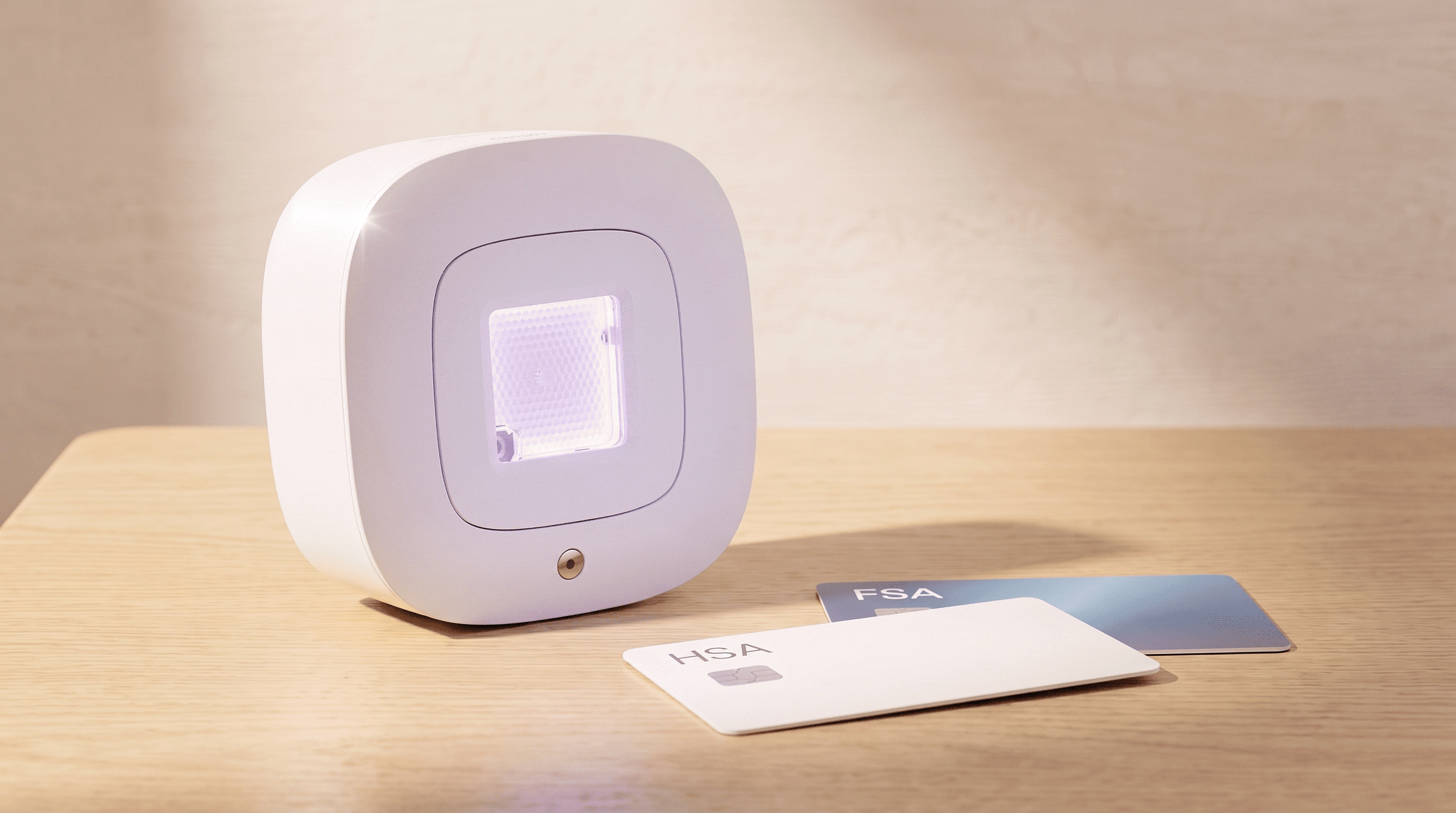
Beacon is an EPA-registered disinfection device that uses filtered Far-UVC 222nm light to inactivate illness-causing germs, in the air and on surfaces, continuously, in rooms where people are present. The safety of the 222nm wavelength for continuous human exposure is the foundation that makes this possible.