Last week, Beacon attended the 2025 International Conference on Far-UVC Science and Technology (ICFUST) at the University of Colorado. The annual conference convenes leading researchers, scientists, and industry professionals to discuss the latest advancements of Far-UVC technology, real world applications, and emerging research.
ICFUST featured a diverse range of presentations and discussions, solidifying Far-UVC's position as a critical, life-saving area of health, as highlighted by Troy Cowan, head of the IUVA/Healthcare working group.
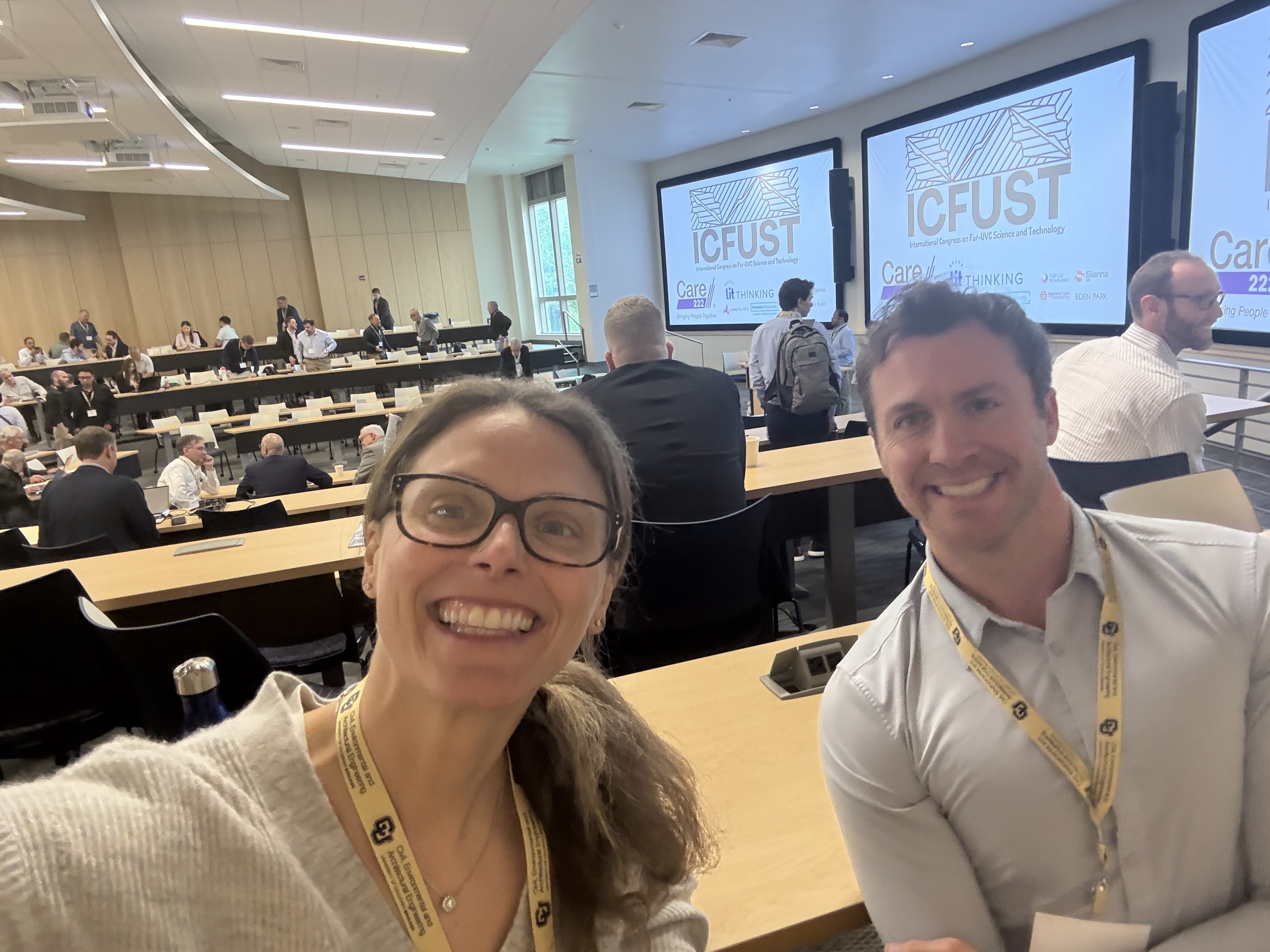
Beacon's CPO Andrea (left) and CEO Brian (right) at ICFUST
This year’s conference highlighted the growing potential of this innovative science in various fields, ranging from public health to air purification. Below are a few key takeaways from Beacon’s Co-Founder and CPO, Andrea Clark:
1. Far-UVC’s role in public health
A major focus this year was the application of Far-UVC in mitigating airborne pathogens. Numerous studies showcased the efficacy of Far-UVC light (specifically at 222nm) in inactivating viruses and bacteria in occupied spaces, with significant emphasis on its safety for human exposure. Discussions revolved around:
- Clinical Trials and Real-World Applications: Updates on ongoing clinical trials and pilot programs implementing Far-UVC systems in hospitals, schools, and even the Seattle Space Needle.
- Regulatory Frameworks and Standardization: Conversations about the development of international standards and regulations for the safe and effective deployment of Far-UVC technology.
- Addressing Emerging Pathogens: Research exploring the potential of Far-UVC as a rapid response tool against new viral threats.
- Educating the Public: Ongoing work on how to better communicate the positive impact of Far-UVC, including work being done by the University of Maryland School of Public Health Communication Hub.
2. A focus on broader applications and future directions
Beyond direct pathogen inactivation, the conference also touched upon broader applications and the future trajectory of Far-UVC research:
- Surface Disinfection: While the primary focus remains airborne pathogens, some research explored the secondary benefits of Far-UVC for surface disinfection in certain contexts.
- Water, Food Safety, and Agriculture: Early-stage research into using Far-UVC for microbial control in food processing and agricultural settings.
- Environmental Impact: Discussions on the energy consumption and environmental footprint of widespread Far-UVC deployment, emphasizing sustainable practices.
3. Far-UVC’s role in the near future
The 2025 ICFUST underscored the rapid progress and immense potential of Far-UVC technology. We’ve moved beyond the initial, is it safe? Is it effective? research and conversations and have moved into how best to deploy Far-UVC.
As research continues to mature and regulatory pathways become clearer, Far-UVC is poised to play an increasingly vital role in creating healthier and safer indoor environments globally. We look forward to being part of the continued innovations and real-world impacts that stem from the discussions and collaborations at this year's conference.