In short, HSA and FSA dollars only cover products used to diagnose, treat, manage, or prevent a specific medical condition. They do not automatically cover anything that's simply good for your health in general.
What Actually Makes a Product HSA or FSA Eligible?
Both account types run on the same section of the tax code: IRC 213(d), as implemented by the IRS in Publication 502. It defines medical expenses as “the costs of diagnosis, cure, mitigation, treatment, or prevention of disease and for the purpose of affecting any part or function of the body.”
The same publication defines what is not considered medical expenses: “medical expenses don't include expenses that are merely beneficial to general health, such as vitamins or a vacation.” A product has to be doing a specific job for a specific condition, not just contributing to wellness in the abstract.
Which Home Health Products Are Always Eligible?
Some items have essentially one plausible use, so the IRS lists them as eligible without any extra documentation required at checkout. These include:
- Bandages and other medical supplies
- Blood sugar test kits and similar diagnostic tools
- Crutches, purchased or rented
- Wheelchairs used for the relief of a sickness or disability
- Hearing aids, along with batteries, repairs, and maintenance
- Eyeglasses and contact lenses needed for medical reasons, plus solution and cleaner
- Oxygen and oxygen equipment for breathing problems caused by a medical condition
For these, your HSA or FSA card should work. Keep the receipt in case your administrator asks for it later, but there's no consultation or approval step standing between you and the purchase.
What About “Dual-Purpose” Products Like Air Purifiers?
Some home health products are not so clean-cut. An air purifier is a good example: it's useful to almost anyone, but general usefulness is what IRC 213(d) excludes. It only clears the bar when it's tied to a specific diagnosed condition.
That's what the industry calls a “dual-purpose” item, and it's the category Flex — a company that processes HSA/FSA payments for products like air purifiers — spends most of its compliance effort on. Flex notes that a strong case typically rests on a documented condition such as asthma, allergic rhinitis, COPD, or a similar respiratory diagnosis.
The documentation that makes the difference is a Letter of Medical Necessity.
How Does a Letter of Medical Necessity Work?
A Letter of Medical Necessity (LMN) is what connects a dual-purpose product to your specific medical situation, in writing. Without it, your plan administrator has no way to tell a personal-comfort purchase from a medical one.
A usable LMN generally includes:
- Your name and the clinician's credentials
- The diagnosed condition being addressed
- The specific product being recommended
- Why that product supports treatment or symptom management
- A duration, typically around 12 months, after which it needs to be renewed
In practice, getting an LMN doesn't have to mean scheduling a separate doctor's visit. Several HSA/FSA payment processors, including Flex, now bundle a brief clinical consultation into checkout itself: you answer some health questions, a licensed clinician reviews them, and — if your situation qualifies — issues the letter in the same flow as your payment.
Do HSA and FSA Follow the Same Rules Here?
Mostly yes, with some differences:
The tax code doesn't change between the two, but what does change is the party enforcing it. An HSA is yours, so eligibility comes down to the IRS standard alone. An FSA is administered through your employer's plan, and some plans apply tighter rules than the IRS requires; meaning a purchase that would clearly qualify on an HSA can occasionally get flagged on a particular FSA. When in doubt, check your specific plan documents before you buy.
Can HSA/FSA Funds Cover Far-UVC Disinfection Products?
Indoor air quality sits squarely in the dual-purpose category. Asthma alone currently affects 27.8 million people in the U.S. — 8.4% of the population — according to the CDC's most recent national data. For a lot of households managing a diagnosed respiratory condition, reducing what's circulating in the air at home is part of a broader plan worked out with a clinician.
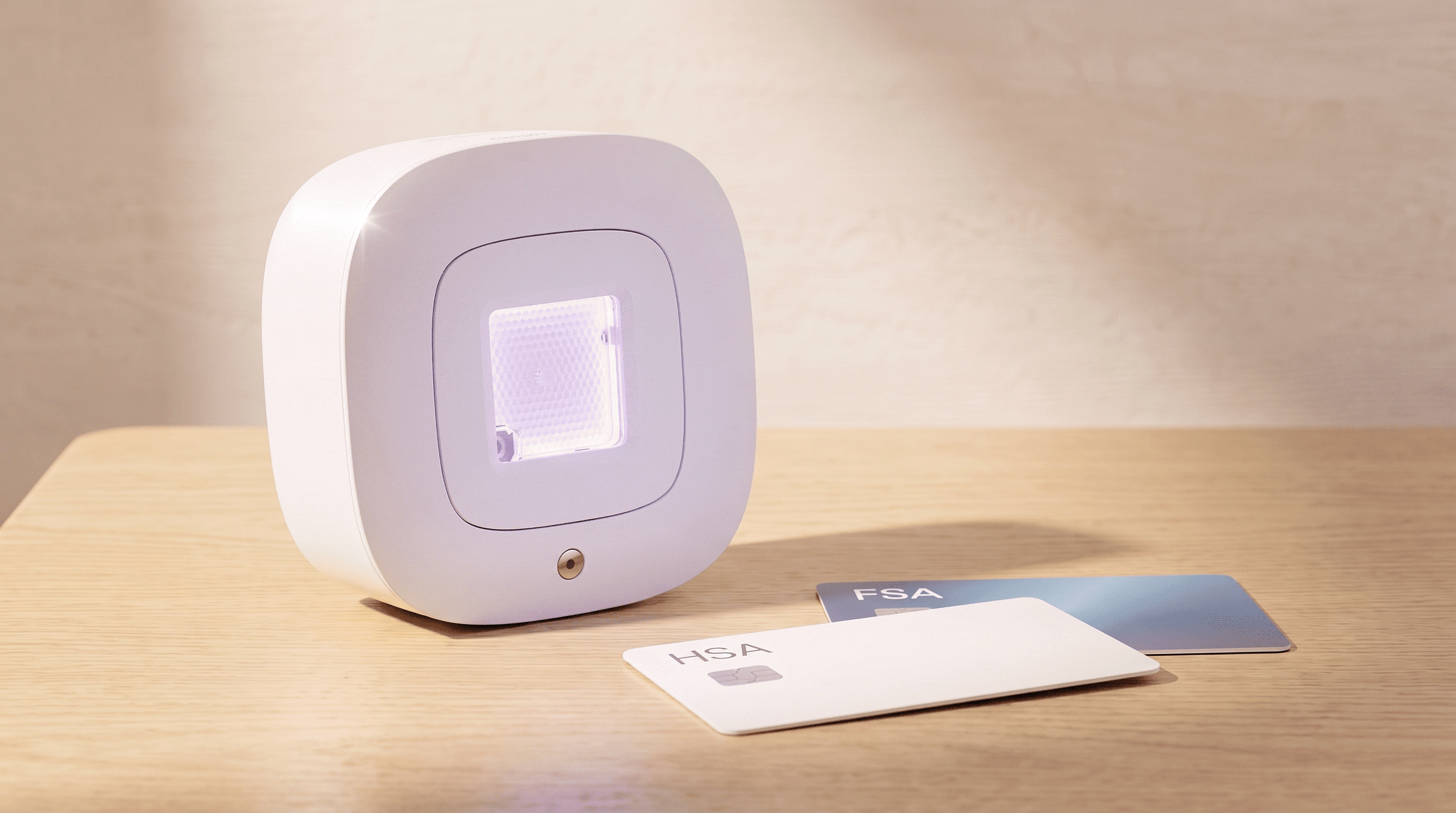
Beacon is an EPA-registered Far-UVC disinfection device that uses 222nm light to continuously reduce pathogen levels in the air and on surfaces, inactivating up to 99.99% of pathogens that cause Influenza A/B, RSV, and COVID-19 among many others.
And now, Beacon can be purchased with HSA or FSA funds. At checkout, select Flex as your payment method. You can complete the purchase with pretax dollars in that same transaction, no separate doctor's appointment or LMN required.