A HEPA air purifier and a Far-UVC device both clean your air, but they don't do the same job. One catches particles. The other destroys them. If you're trying to figure out whether your air purifier is already handling viruses and bacteria, the answer is: not in the way you might think.
Does a HEPA filter kill viruses?
No, a HEPA (High Efficiency Particulate Air) filter does not kill germs, it traps them. As air is pulled through the unit, the filter's dense fiber mesh captures particles 0.3 microns and larger, including dust, pollen, and aerosol droplets that may be carrying viruses or bacteria. A true HEPA filter captures at least 99.97% of particles at that size.
However, those trapped particles stay on the filter. The virus or bacteria isn't destroyed — it's just no longer floating around your living room, at least until you change the filter. And HEPA only cleans air that's actually drawn through the unit, so its real-world performance depends heavily on airflow and how many times the room's air cycles through per hour.
There's also a size problem. Many airborne viruses, including COVID-19, are closer to 0.1 microns — smaller than the particles HEPA filters are rated to catch most efficiently. A standalone virus particle can pass through more easily than one riding inside a larger respiratory droplet.
What is UV disinfection and how does it work?
UV disinfection uses a specific wavelength of light (222nm Far-UVC light, to be exact) that damages the RNA and DNA inside viruses and bacteria, inactivating them and reducing their ability to replicate.
Unlike HEPA filters which use airflow to pull and trap particles into a filter, Far-UVC neutralizes pathogens, including those too small for HEPA to reliably capture. Studies have shown that Far-UVC devices can reach the equivalent of 184 air changes per hour, reducing steady-state pathogen concentration by 98.4% — a level that would require an enormous number of HEPA units to match.
Far-UVC at 222nm is also proven safe for prolonged exposure, meaning it runs safely in occupied spaces with people and pets present.
So which is right for your home — HEPA or Far-UVC?
This isn't an either/or. They solve different problems:
HEPA filtration removes particles — dust, pollen, pet dander, smoke, and particulate matter — from the air that passes through it. It's the right tool for allergens and air quality issues.
Far-UVC disinfection targets the viruses and bacteria themselves. The CDC has noted that UV technologies are a supplemental layer on top of ventilation and filtration, not a replacement.
If your goal is reducing allergens, a HEPA purifier does that job well. If your goal is reducing the concentration of illness-causing germs — the viruses and bacteria that cause colds, flu, and RSV — that's a job Far-UVC is built for.
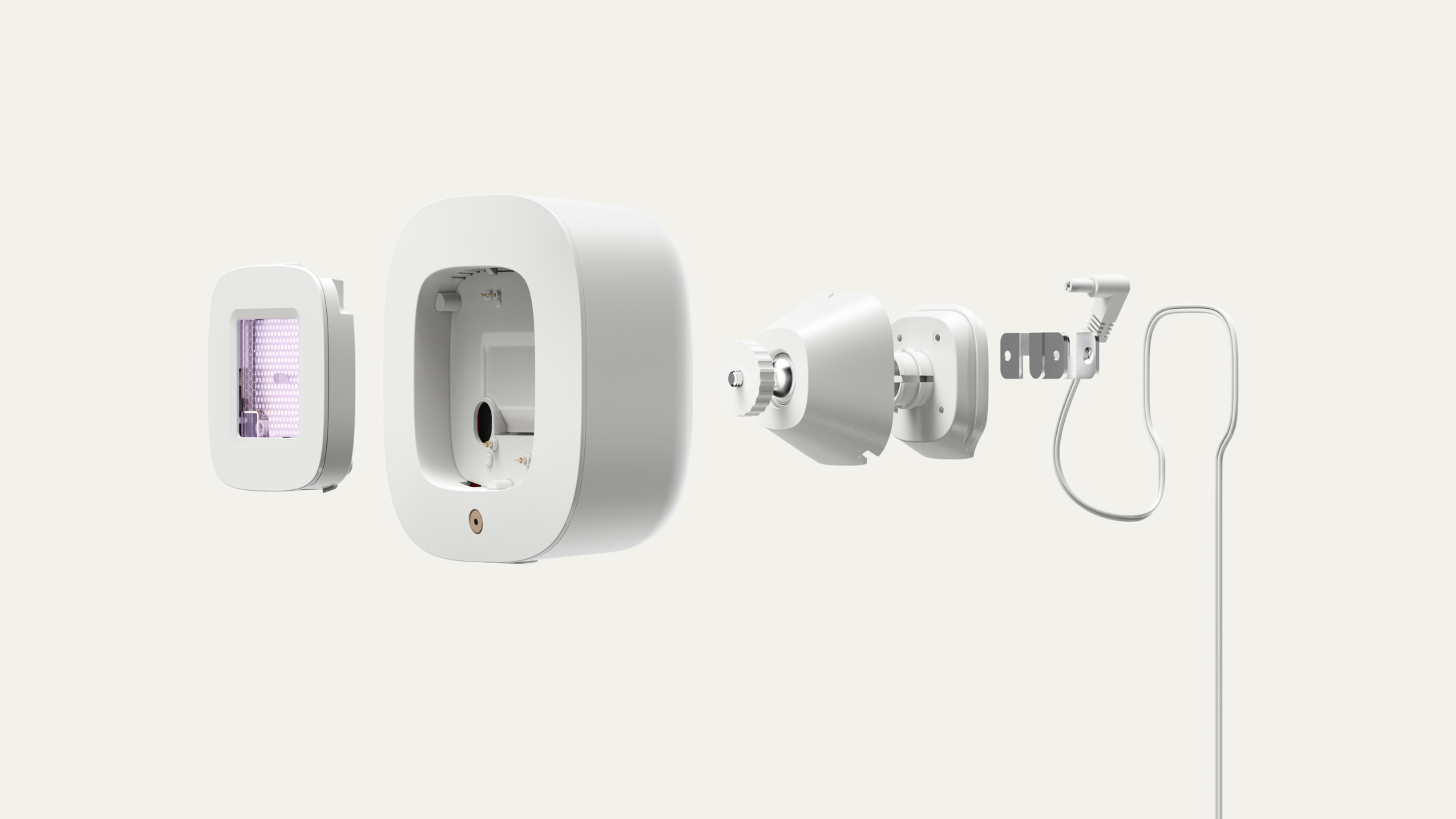
Beacon: Far-UVC, engineered for your home
Beacon uses Far-UVC 222nm light, clinically proven to inactivate up to 99.99% of airborne pathogens including influenza, RSV, and COVID-19. Unlike a HEPA purifier, it doesn't wait for air to cycle through a filter — it works continuously on the air and surfaces in the room, controlled from your phone, with no filters to replace. For households already running an air purifier for allergens, Beacon is an additional layer of protection against germs.