If you've started shopping for a UV disinfection device, you may have noticed that “UVC” and “Far-UVC” sometimes get used interchangeably - but they’re not the same thing.
UVC is the broader category: ultraviolet light spanning roughly 180 to 280 nanometers, the band where UV energy is strong enough to damage microorganisms. Far-UVC is a narrow slice at the bottom of that range, roughly 200–235 nanometers, and that narrow slice changes what the light is able to do.
What Is UVC Light?
Conventional UVC devices typically run at 254 nanometers, the wavelength long used in hospitals, HVAC ducts, and “upper-room” systems installed near the ceiling. It works by damaging a microorganism's genetic material, stopping it from replicating — and that includes human cells that are exposed to it.
That's why the CDC notes that UV energy directed or reflected into an occupied space “has the potential to cause temporary eye or skin damage.” Upper-room 254nm systems get around this by installing fixtures above head height, aimed away from where people stand or sit, maintained by trained staff, and locked to switches the public can't access.
What Is Far-UVC Light?
Far-UVC works on the same basic mechanism — disrupting a pathogen's genetic material — but at a much shorter wavelength, specifically 222 nanometers. That shorter wavelength is absorbed almost immediately by biological material, so it loses nearly all its energy within a few micrometers of tissue: enough depth to reach a virus or bacterium, but not enough to reach living human cells underneath the skin's outer layer or the eye's tear film.
As the researchers who first tested this at scale put it: “Germicidal ultraviolet light, typically at 254 nm, is effective in this context but, used directly, can be a health hazard to skin and eyes. By contrast, far-UVC light (207–222 nm) efficiently kills pathogens without harm to exposed human tissues.” In other words: conventional UVC light poses harm to human tissue and should not be used in occupied spaces, whereas Far-UVC is considered safe for continuous human exposure.
A Summary Chart: UVC vs. Far-UVC at a Glance
Is Far-UVC Safe to Use Around People?
Far-UVC’s safety has been tested directly. A 2024 study installed 222nm Far-UVC fixtures in the ceiling of a real, occupied indoor space and measured airborne virus levels as staff worked underneath them, rather than in an empty lab chamber. Staying within current regulatory exposure limits, the fixtures reduced airborne infectious murine norovirus, a conservative stand-in for viruses like flu and coronavirus, by 99.8%. It was the first study to directly demonstrate Far-UVC's antimicrobial effect on airborne pathogens in an occupied indoor location, rather than a bench-scale or chamber setup.
That's the practical difference from conventional UVC: Far-UVC doesn't need upper-room shielding, restricted switches, or an empty room to do its job safely.
How Effective Is Far-UVC at Killing Viruses and Bacteria?
Effective, and fast. In lab testing, low doses of 222nm Far-UVC — 1.7 and 1.2 mJ/cm² — inactivated 99.9% of two airborne human coronaviruses within minutes of exposure. At the regulatory exposure limit in place at the time of the study, continuous Far-UVC exposure reached roughly 90% viral inactivation in about 8 minutes and 99.9% in about 25 minutes.
This mechanism disrupts the genetic material of every virus and bacterium exposed to it, so the same light source that inactivates coronaviruses works against a wide range of airborne and surface pathogens.
What to Look for in a UV Disinfection Device
Not every product labeled “UV disinfection” uses Far-UVC, and the wavelength is the detail that determines what a device can and can't safely do. Before choosing one, check for:
- The actual wavelength, not just the word “UVC.” A device running at 254nm is not the same product as one running at 222nm, regardless of how it's marketed.
- Whether it's rated for occupied, unshielded spaces, or whether it requires upper-room installation, restricted access, or an empty room.
- An EPA registration, which means the manufacturer has filed efficacy data with the EPA.
- Published, cited efficacy data — a specific inactivation percentage tied to a named pathogen.
About Beacon
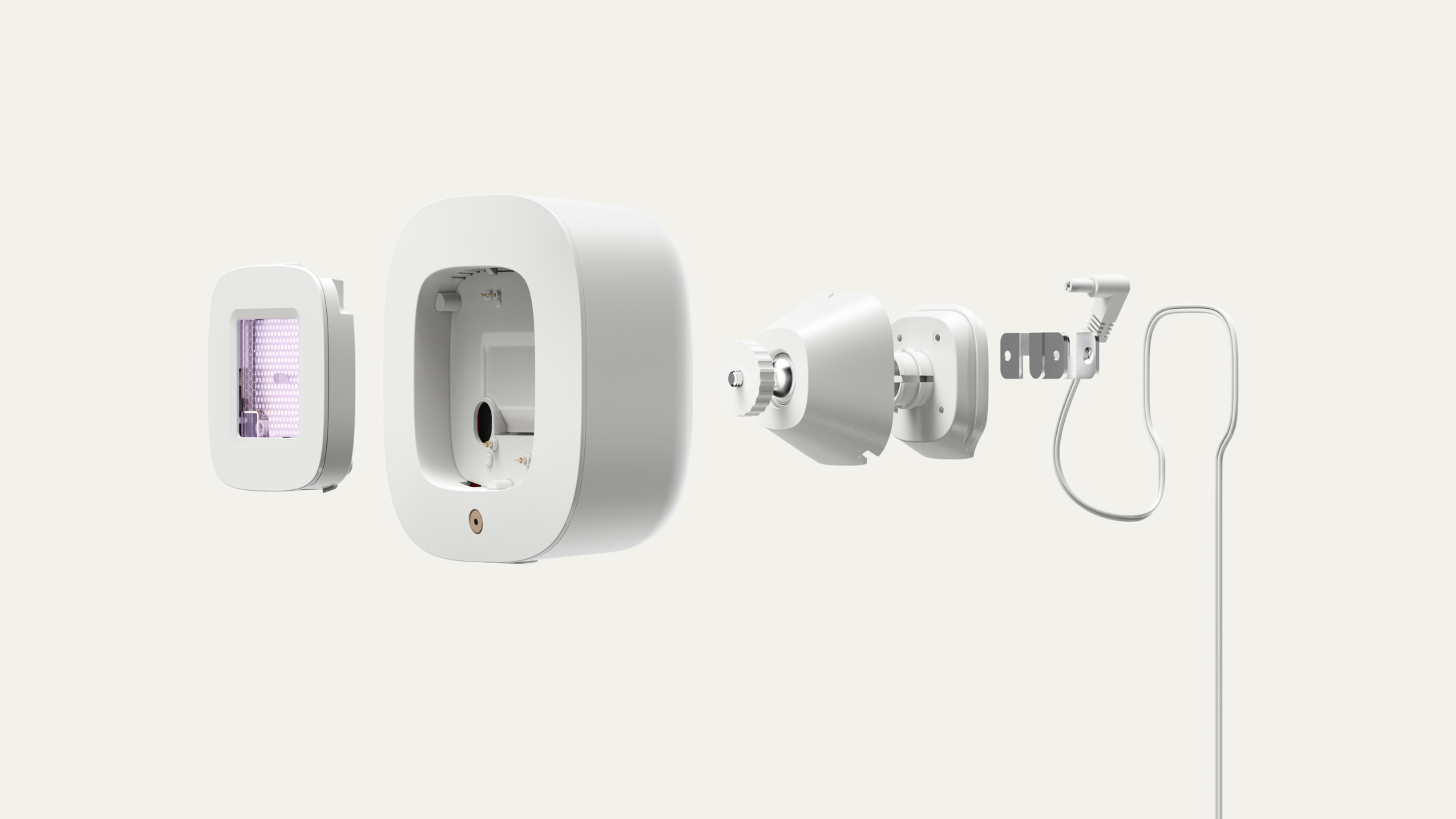
Beacon uses Far-UVC light at 222nm, the wavelength studied in the research above that is considered both effective at inactivating germs, and safe for human exposure. Independent testing has shown it reduces up to 99.99% of airborne and surface pathogens, including the viruses that cause the flu, RSV, and COVID-19. It's an EPA-registered disinfection device, meaning its claims are backed by data on file with the agency.
Because Far-UVC doesn't reach living skin or eye cells, Beacon is built to run continuously in occupied rooms — homes, offices, waiting areas, classrooms — without the upper-room shielding or restricted access that conventional UVC requires. It installs like a standard fixture and disinfects the air and surfaces continuously, with no extra effort.