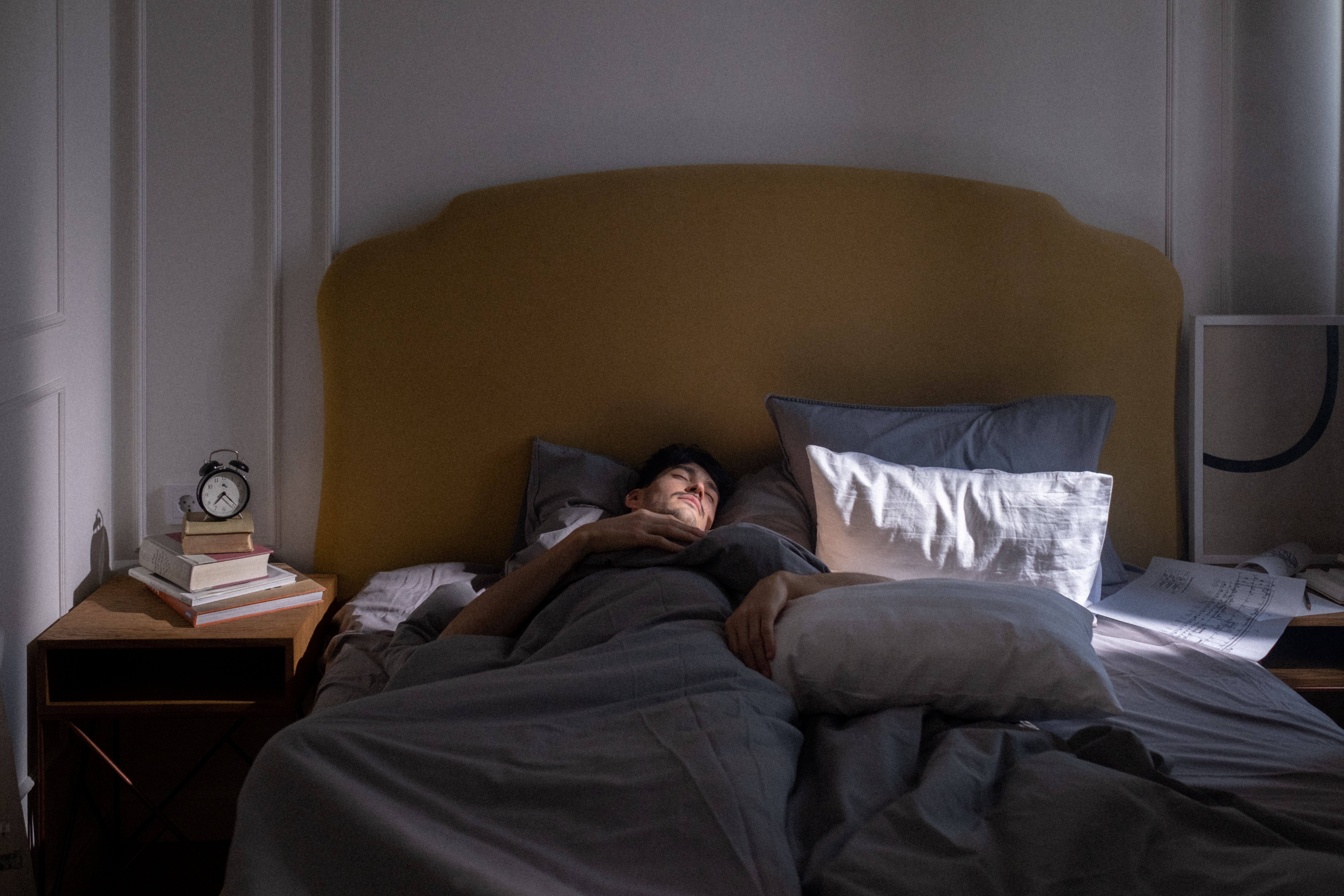
If you track your HRV, your sleep score, and your glucose curve, you already know recovery is built overnight; but few people know how to optimize their bedroom for sleep beyond blackout curtains and a white noise machine. Three variables shape your sleep more than almost anything in your evening routine: temperature, air, and light.
What's the best bedroom temperature for deep sleep?
Cleveland Clinic sleep psychologist Dr. Michelle Drerup recommends keeping the bedroom between 60°F and 67°F. This is the range that helps stabilize REM sleep, the stage most vulnerable to disruption from heat.
Your core body temperature naturally drops as part of falling asleep. A room that's too warm fights that process directly. “Heat is a huge disruptor for REM sleep,” Drerup says, noting that above 70°F, most people start losing sleep quality without realizing why.
Going too cold works against you too, just through a different mechanism. Your body constricts blood vessels and shortens breathing to conserve heat, putting extra load on your cardiovascular system overnight. The 60–67°F range is the band where your body doesn't have to work to regulate itself.
Does bedroom air quality affect your sleep score?
Yes, and the effect is measurable. A 2023 study published in the peer-reviewed journal Buildings tracked sleep across three CO2 concentration levels — 680, 920, and 1,350 ppm, simulating one, two, and three people sleeping in a closed room. Using polysomnography (a diagnostic test that tracks your brain waves, eye movements, heart rate, breathing patterns, blood oxygen levels, and muscle activity while you sleep), researchers found that the proportion of deep sleep dropped from 20.4% to 17.3% to 14.4% as CO2 climbed — alongside more awakenings, more turning over, and more difficulty falling asleep.
If your deep sleep percentage looks worse on nights you share a room, or with the door and windows closed, this is likely why. It has to do with ventilation. A closed bedroom with two adults and a dog can climb past 1,000 ppm well before sunrise, right in the range the study flagged as the point deep sleep starts to erode.
How does bedroom light affect your circadian rhythm?
Light is the strongest input your circadian clock responds to. Harvard Health Publishing reports that even eight lux (about twice the brightness of a nightlight) can suppress melatonin secretion and shift circadian timing. Blue wavelengths are the worst offenders: in one Harvard-affiliated study, 6.5 hours of blue light exposure suppressed melatonin twice as long as green light of equal brightness, and shifted circadian rhythm by a full three hours compared to 1.5 hours for green light.
Five ways to optimize your bedroom for sleep tonight
- Set the thermostat to 60–67°F before you get into bed
- Crack a window or run a fan to keep air moving, especially with more than one person or a pet in the room.
- Swap any white nightlight for a dim red one — red light has the smallest effect on melatonin.
- Cut screen exposure 2-3 hours before bed, or use blue-light-blocking settings if that's not realistic.
- Block outside light with blackout curtains or a sleep mask.
A final variable: pathogen load
Temperature and airflow explain a meaningful share of what your tracker sees. What's harder to see is what else is circulating in a bedroom with the door shut all night: the respiratory viruses and bacteria that move through a household don't stay contained to one person, particularly during cold and flu season.
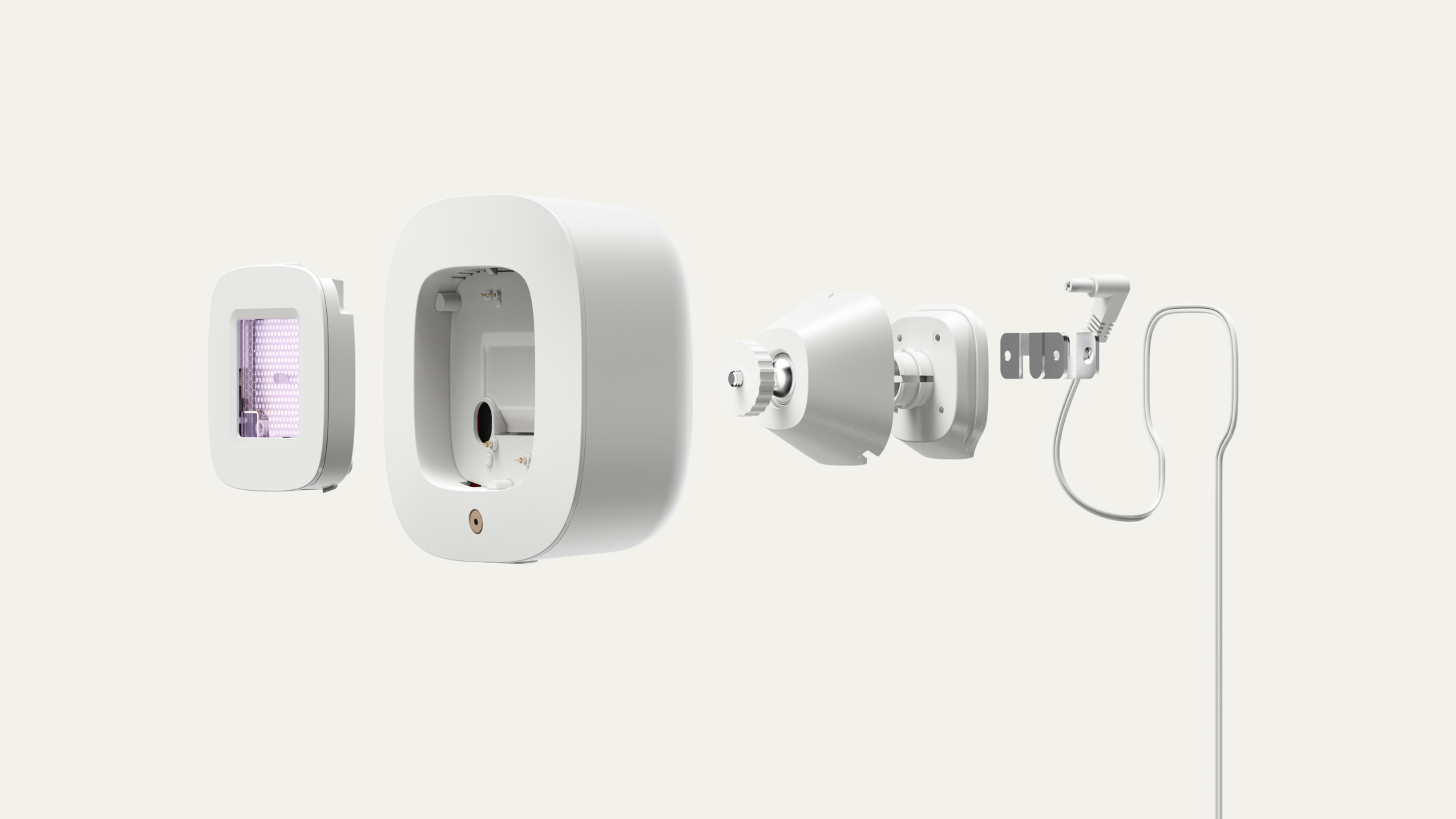
Beacon uses Far-UVC 222nm light to continuously inactivate up to 99.99% of airborne pathogens, including the viruses that cause Flu, RSV and COVID-19 without a chemical spray. It runs in the background around the clock, without any extra effort.
That's a different job than the fan or cracked window handling your CO2 problem, or an air purifier capturing allergens. Ventilation moves stale air out; Beacon neutralizes germs in the air and settled on surfaces. A bedroom built for recovery benefits from both.