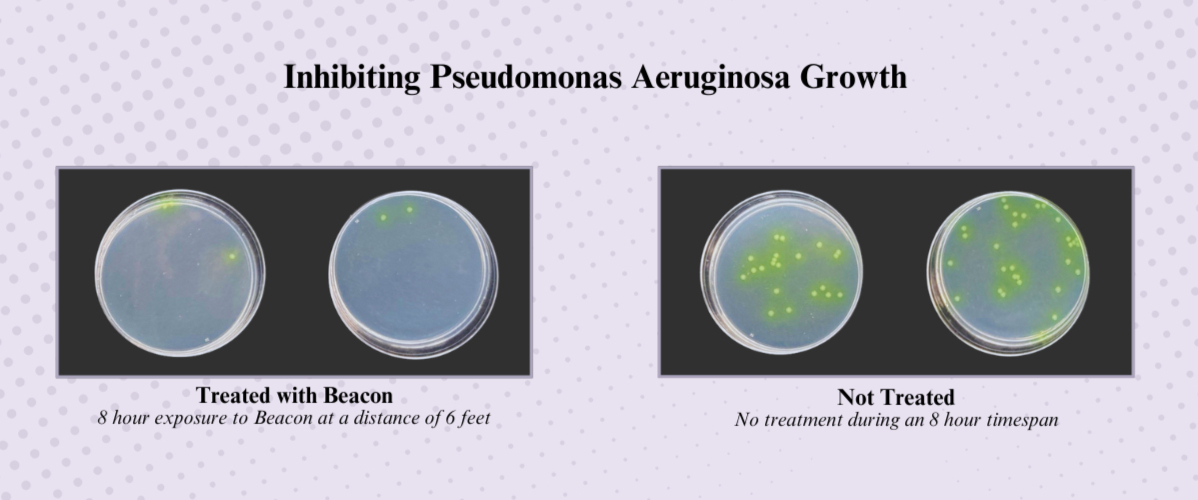
Inhibiting Pseudomonas aeruginosa: Achieving a 90% pathogen kill rate
Pseudomonas aeruginosa (P. aeruginosa) is a hearty pathogen known for its ability to thrive in diverse environments including hospitals, water systems, and industrial settings. Its robust nature and resistance to antibiotics make it a significant threat, particularly in healthcare environments where it can cause severe infections in the blood which can lead to bacteraemia or sepsis, in the respiratory system which can lead to pneumonia, and other areas in the body such as the urinary tract, gastrointestinal and even the dermis.
Earlier this month, a third party independent lab tested Beacon’s disinfection technology on P. aeruginosa, and demonstrated the technology’s ability to inhibit and eliminate P. aeruginosa with a 90%+ kill rate at distances up to 6 feet.
Why it matters: Understanding bacteria resilience
P. aeruginosa is a bacteria that is notorious for its adaptability. It can survive on surfaces for extended periods, and can be resistive against chemical-based cleaning products. This makes the risk it poses in indoor environments, particularly healthcare environments, extremely high.
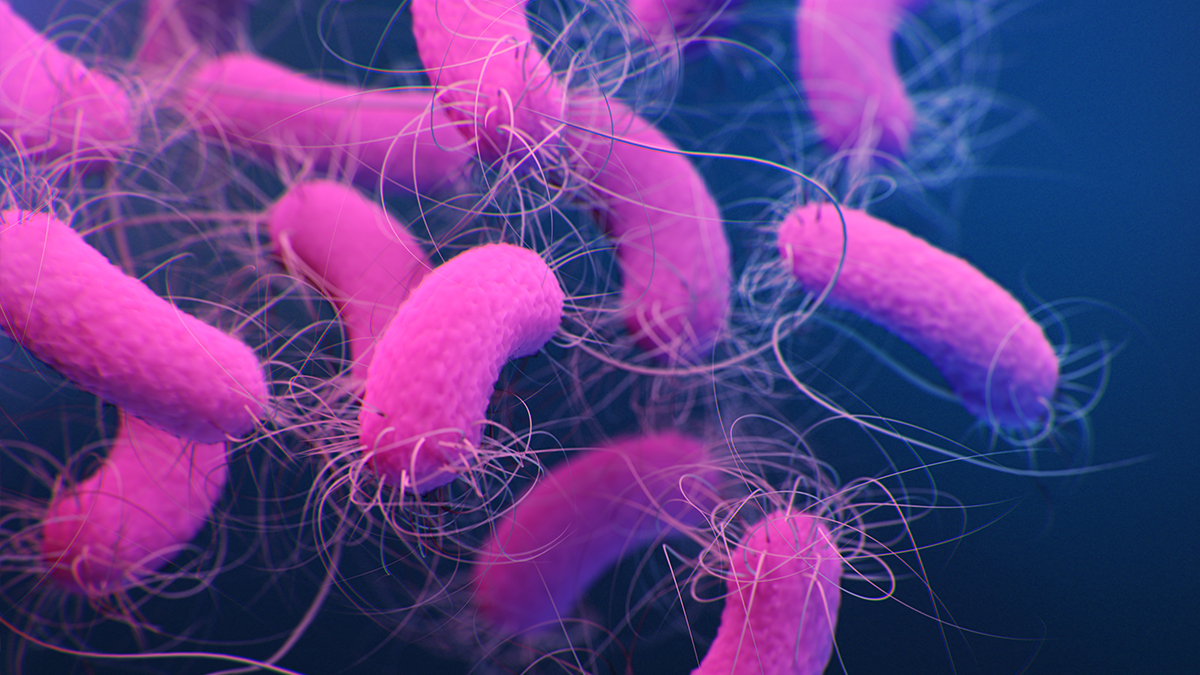
Image of Pseudomonas Aeruginosa. Credit: CDC
Preventing pathogen growth with Beacon
Beacon's disinfection technology works by damaging pathogen DNA and proteins, which prevents replication and leads to cell death. This novel approach to air and surface disinfection can help dramatically limit pathogen growth, as demonstrated by the P. aeruginosa study.
This presents a significant breakthrough in infection control. This advancement can have an enormous impact on hospitals, public spaces, and high-traffic areas where pathogen transmission is a concern. Implementing Beacon in these spaces could drastically reduce hospital-acquired infections (HAIs) and mitigate outbreaks in industrial and public settings.
The future of infection prevention
As antimicrobial resistance continues to pose a global challenge, innovative disinfection technologies like Beacon offer a proactive solution to controlling resilient pathogens like P. aeruginosa. By leveraging cutting-edge scientific advancements, we move closer to creating safer and more hygienic environments with enhanced infection prevention measures.
Are you interested in learning how Beacon can help keep your spaces healthy? Contact Beacon's sales team at sales@beaconlight.co, book a meeting, or sign up for our waitlist.