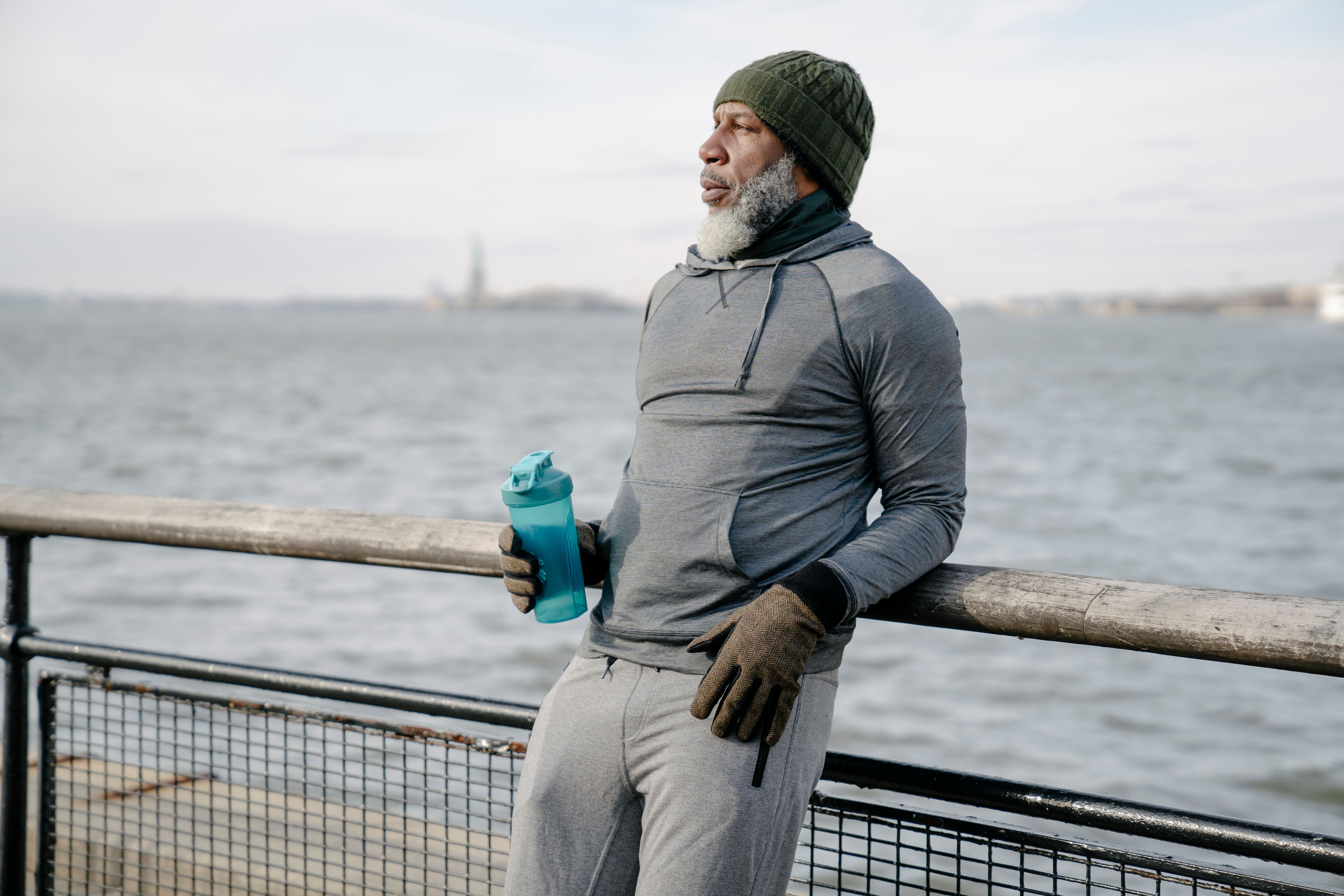
If you’ve ever trained for a marathon or other athletic event and found yourself sick — it isn’t bad luck, it’s a documented pattern in exercise science. And it has a name.
The "open window" effect
After a long or intense training session, your immune system goes through a temporary dip in function — a window, typically lasting several hours, during which several markers of immune defense are measurably reduced. Exercise immunologists call this the open window theory, and it's been studied since the 1990s.
During this window, natural killer cell activity drops, and mucosal immunity in the upper respiratory tract — your first line of defense against inhaled viruses — is temporarily weaker. The research consistently shows elevated risk of upper respiratory tract infection (URTI) during periods of heavy training and especially in the one to two weeks following a marathon-distance event.
The numbers from real races back this up. A study of runners completing the 2010 London Marathon found that 19% of recreational runners reported a URTI in the following weeks — and that figure rose to 45% among the more competitive athletes who pushed harder.
Why fitness doesn’t equal non-susceptibility
This is what catches many athletes off guard: being fit doesn't mean being non-susceptible to this effect; if anything, the athletes pushing the hardest see the highest rates.
Multiple nutritional countermeasures have been studied, including carbohydrate intake during exercise, vitamin C, glutamine — with carbohydrate supplementation showing the most consistent (though partial) effect on some immune markers. These help, but another important factor is the air you breathe.
Germs that cause illnesses like influenza, RSV, and rhinovirus spread primarily through the air, as aerosols that can remain suspended indoors for hours. During the open window, your upper respiratory tract is less equipped to fend off whatever you breathe in — at the gym, on a crowded train, in your own living room if someone in the house is contagious.
The environment you recover in matters
The open window happens during the exact hours you're also doing your most important recovery — showering, eating, and especially sleeping. Sleep is when most training adaptation happens, and it's also when you're spending the longest uninterrupted stretch in one indoor space, breathing the same air.
You can't control the air at the gym or on race day. You can control the air in the room where you sleep and live your life.
How Far-UVC light improves your training environment
Germicidal ultraviolet (UV) light has been used in hospitals for decades to disinfect air and surfaces. It works by damaging the DNA and RNA of viruses and bacteria, reducing their ability to replicate. The limitation has always been that conventional germicidal UV (254nm wavelength) is harmful to skin and eyes, so it can only run in empty rooms.
Far-UVC light at 222nm works the same way, but at a specific wavelength proven safe for human exposure. That means it can run continuously, in the room, even while you're asleep.
Beacon brings this technology to the home, neutralizing up to 99.99% of airborne and surface pathogens including those that cause influenza A and B, RSV, and COVID-19.
Train hard. Recover in cleaner air.
The open window is a normal part of how the body responds to heavy load. Beacon doesn't replace sleep, fueling, or any part of your training plan. It's the layer that reduces illness-causing germs where you spend most of your time, so that all your other healthy habits work better.
Beacon uses Far-UVC 222nm light technology, clinically proven to inactivate up to 99.99% of airborne pathogens including RSV, influenza A/B, and COVID-19. It mounts on the wall, runs continuously, and requires no maintenance or effort from you.