If you've swapped bleach and chemical sprays for vinegar, essential oils, or steam — you've probably wondered whether your home is truly disinfected.
“Clean” vs. "disinfected": what’s the difference?
Cleaning removes dirt, grease, and some surface microbes. Disinfecting kills or inactivates the ones that remain. A surface can look and smell clean while still carrying viable viruses and bacteria.
The Environmental Protection Agency (EPA) defines a disinfectant as something that kills 99.9% of targeted germs within five to ten minutes, under specific conditions. Products that meet this standard go through rigorous EPA registration and testing.
Vinegar: useful, but not a disinfectant
Vinegar is acidic, and acetic acid does have some antimicrobial effect — it can disrupt the cell structure of certain bacteria over time. But it falls well short of the EPA's disinfection standard. It's not EPA-registered and does not reliably kill pathogens like Covid-19, Staph, MRSA, or influenza.
Multiple sources reach the same conclusion: vinegar is a solid all-purpose cleaner for grease, mineral deposits, and odors, but it isn't a substitute for disinfection — particularly against viruses like SARS-CoV-2 (the virus that causes COVID-19).
Essential oils: some evidence, but inconsistent
Essential oils occupy a middle ground. Tea tree oil has shown antiviral activity against influenza in lab studies, and some research has found that compounds in eucalyptus oil may interfere with how COVID-19 replicates.
So while there is some evidence for essential oils, it’s largely lab-based, dependent on concentration and contact time, and like vinegar, essential oils aren't EPA-registered disinfectants. The gap between "has been shown to have antiviral properties in a study" and "reliably disinfects your living room" is significant.
Eco-Friendly cleaners: more effective, with some limitations
For targeted disinfection, such as wiping down a surface after someone's been sick or cleaning a high-touch area during virus season — there's a middle ground. The EPA's Design for the Environment (DfE) certification applies specifically to antimicrobial products like disinfectants, and it means every ingredient has been reviewed by EPA scientists against stringent criteria for human health and environmental impact, including restricted VOC (volatile organic compound) content.
These are a genuine upgrade from conventional disinfectant sprays for anyone managing chemical exposure in the home. But two things are worth noting. First, DfE-certified products are designed for surface disinfection — they don't address what's in the air. Second, experts note these products are best used situationally, not as an everyday cleaning routine.
Where this leaves the chemical-free household
Chemical disinfectants that meet the EPA standard often come with toxins, fragrances, and residues that you don’t want in your home. Non-toxic alternatives, like vinegar and essential oils, avoid those issues but don't meet the same disinfection bar and don’t reliably reduce the concentration of viruses and bacteria in the home.
Far-UVC light: disinfection without the chemical tradeoff
Far-UVC light damages the DNA and RNA of viruses, bacteria, and mold spores so they can't replicate — the same basic mechanism hospitals have relied on for decades with germicidal UV. The difference is that while conventional germicidal UV is effective but unsafe for occupied spaces, Far-UVC is safe for continuous human exposure.
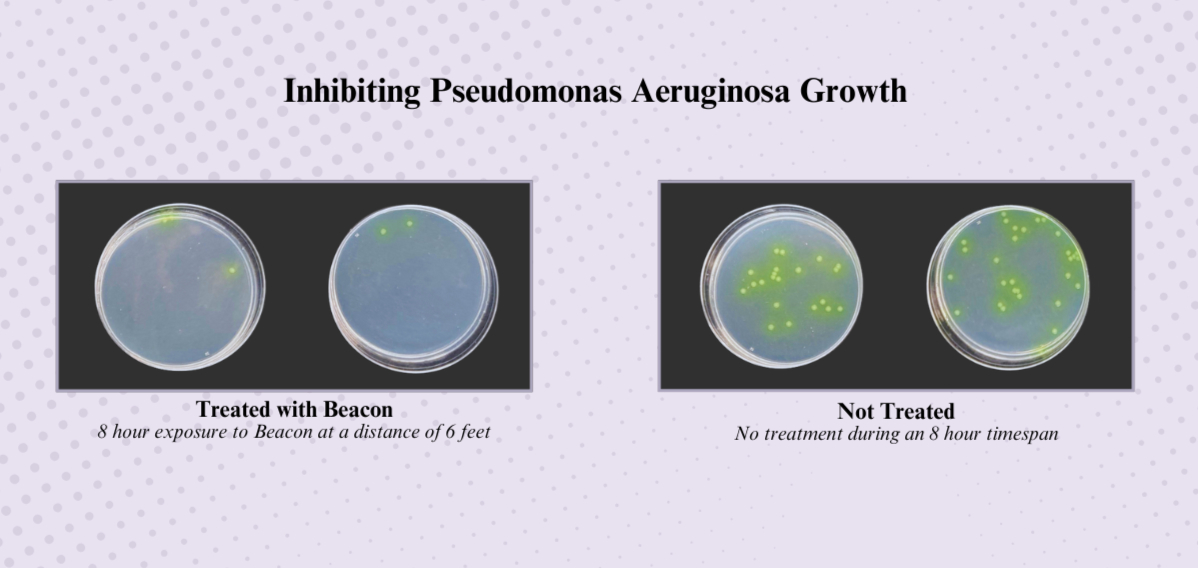
Beacon brings the safe, disinfecting power of Far-UVC to the home, and is proven to inactivate up to 99.99% of airborne pathogens. It meets the same EPA disinfectant criteria as chemical sprays, but without the toxins, residue, or smells.
Beacon uses Far-UVC 222nm light technology, clinically proven to inactivate up to 99.99% of airborne pathogens including Flu, RSV, and COVID-19. It’s easy to install, controlled from your phone, and safely disinfects your environment 24/7, with no extra effort.